
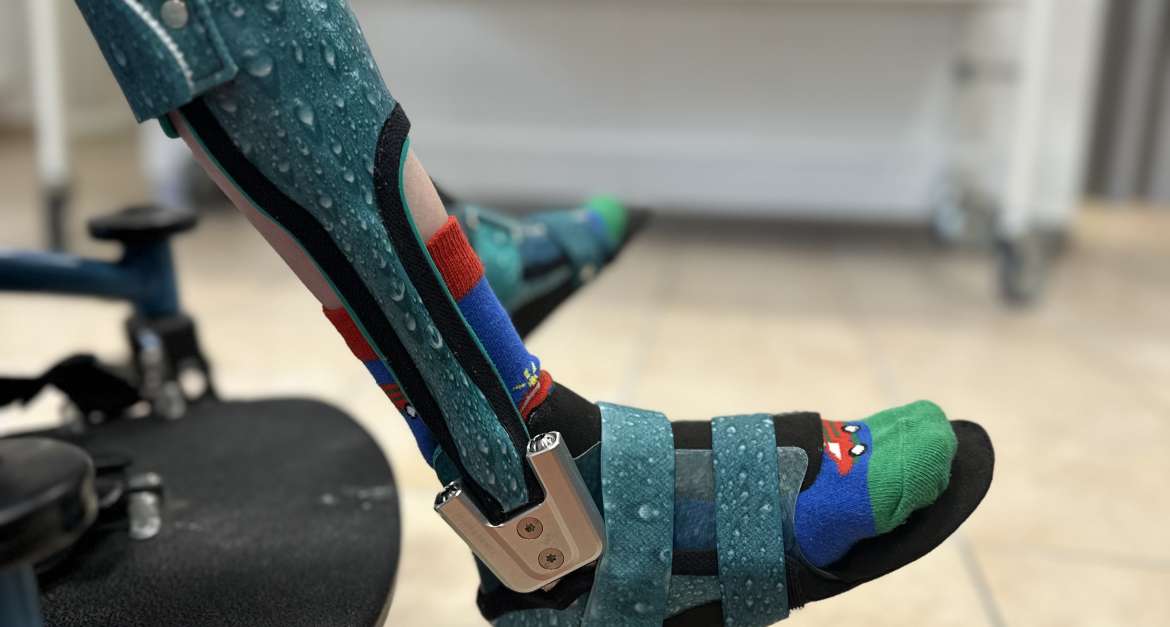
An orthosis is a medical device worn externally on the body to support, stabilize, relieve, correct, or immobilize body parts. It is used for both congenital and acquired misalignments, as well as age-related wear and tear.
Orthoses are made of firmer, shape-giving materials such as plastic, carbon or silicone, and aim to correct or limit deformities and restricted movement, as well as to support existing functions.
We specialize in individual care for both children and adults.
Orthoses for the Lower Extremity (Foot, Leg and Hip)
Lower extremity orthoses primarily serve to guide and correct the foot, leg and hip. They are used individually or in combination depending on the indication.
- Special insoles (shell insoles & sensorimotor insoles): Correct foot misalignments.
- Ankle orthoses (DAFO – Dynamic Ankle Foot Orthosis): Correct severe foot misalignments (e.g. flat foot with inward collapse).
- Lower leg orthoses (plastic orthoses, spiral orthoses, orthoses with posterior or anterior carbon spring, lower leg orthoses with joint): Can consist of a single piece of plastic, or the foot and lower leg parts are dynamically connected via a carbon spring or a joint.
- Full leg orthosis: Features a dynamic joint at both the ankle and knee area. Used primarily for paralysis and instabilities.
- Positioning orthoses: Correct foot and leg misalignments in an unloaded state, typically at night. They prevent contractures and shortenings, or stretch out existing shortenings.
- Hip abduction orthoses: Used after hip surgery or for hip dysplasia. The hip is held in the medically required abduction position.
- FES (Functional Electrical Stimulation): A therapeutic procedure in which electrical impulses selectively activate muscles to trigger or support movements that are restricted due to nerve or muscle damage. An FES system can be particularly useful in cases of foot-lifting muscle failure.